
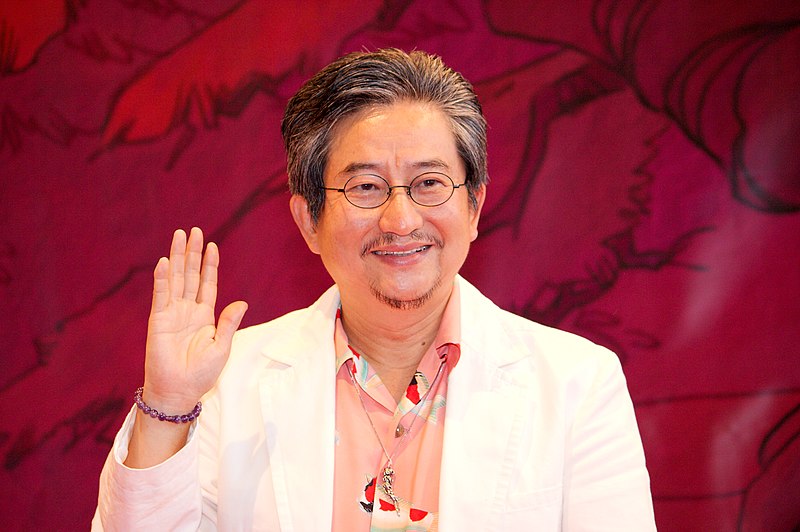
Kiyoshi Nagai (永井æ½", Nagai Kiyoshi, born September 6, 1945 in Wajima, Ishikawa), better known by the penname Go Nagai (永井 豪, Nagai GÅ), is a Japanese manga artist and a prolific author of science fiction, fantasy, horror and erotica. He made his professional debut in 1967 with Meakashi Polikichi, but is best known for creating Cutie Honey, Devilman, and Mazinger Z. He also pioneered the ecchi genre with Harenchi Gakuen. He is credited with creating the Super Robot genre and for designing the first mecha robots piloted by a user from within a cockpit with Mazinger Z. In 2005, he became a Character Design professor at the Osaka University of Arts. Since 2009, he is a member of Tezuka Osamu Cultural Prize's nominating committee.
Life

Early life
Go Nagai was born on September 6, 1945 â€"in the Ishikawa Prefecture city of Wajima. He is the son of Yoshio and Fujiko Nagai (永井芳雄・冨士å), and the fourth of five brothers. His family had just returned from Shangai. While he was still in his early childhood, he along with his mother and his four brothers moved to Tokyo after the death of his father. As a child, he was influenced by the work of Gustave Doré (specifically, a Japanese edition of the Divine Comedy) and Osamu Tezuka (his brother Yasutaka gave him a copy of Lost World).
After he graduated from the Metropolitan Itabashi High School of Tokyo, he entered the world of manga. While passing his ronin year in a prep school in order to aim at the Waseda University, he suffered a severe case of diarrhea for 3 weeks. Aware of his own mortality, he wanted to leave some evidence that he had lived, by doing something that he liked as a child: working on manga. He was determined to create one work of manga in what he thought were his last months. As Nagai prepared for the task, he went to the hospital, where he was diagnosed with catarrh of the colon, and soon healed. But this was the turning point in his life. Convinced that he would continue working on manga, he stopped attending school after three months and started living as a ronin.
With the help of his brother Yasutaka, he created his first manga works. Aiming to be a manga artist, despite the fact that his mother opposed his manga career, he submitted his works for publication finding many rejected. It is said that when the young Nagai submitted his tables to publishers, his mother secretly convinced publishers to reject them. However, his work was noticed by ShÅnen Sunday, which contacted Shotaro Ishinomori. Thanks to some trial manga he created with the help of his brother Yasutaka, he was finally accepted in the studio of Ishinomori in 1965.
The trial manga was about a science fiction ninja, and was a prototype for a different story, Kuro no Shishi. Nagai was 19 years old when he made this work; it started at 15 or 16 pages and ended up being 88 pages long after a year, and was untitled at that time. Ishinomori saw this work and praised Nagai for it, but commented that the design was too chunky and should improve it a little. Two or three days later, Nagai was invited to become an assistant with Ishinomori and this work was forgotten until 2007, when it was published for the first time, in the magazine Comic Ran TWINS Sengoku Busho Retsuden (コミック乱 TWINS 戦国æ¦å°†åˆ—ä¼) by LEED, under the name Satsujinsha (殺刃者(ã•ã¤ã˜ã‚"ã—ゃ)). His professional career began in 1967, despite the opposition of his mother.
First works
After working as assistant of Shotaro Ishinomori, his very first professional manga work was Meakashi Polikichi (目明ã—ãƒãƒªå‰ also 目明ã‹ã—ãƒãƒªå‰), a very short gag comedy oneshot, published in November 1967 in the magazine Bokura by Kodansha. Almost at the same time, this was followed by the manga adaptation of Tomio Sagisu's TV anime Chibikko Kaiju Yadamon (ã¡ã³ã£ã"怪ç£ãƒ¤ãƒ€ãƒ¢ãƒ³, Little Monster Yadamon), also published in 1967 in the same magazine. A common misconception is that Kuro No Shishi (Black Lion) was his first manga work; while not entirely false, what Nagai really made two years earlier than Meakashi Polikichi, was only a draft for what would later be Kuro no Shishi, which would not be actually published until 1978.
His first works consisted entirely of short gag comedy manga. This would change with Harenchi Gakuen.
First success and controversies
In less than a year after debuting, he met with a big success. After being an unknown manga artist, he became a protagonist of televised debates and journalistic investigations.
In 1968, while Shueisha was getting prepared to launch its first manga publication, ShÅnen Jump, in order to compete with other magazines from rival companies (like ShÅnen Magazine from Kodansha and ShÅnen Sunday from Shogakukan), Nagai was invited to be one of the first manga artists publishing in the new magazine. He contemplated this, since he had to design a long-running series instead of the auto-conclusive short stories that he had been developing until that point. He accepted and the series became a big success, being the first for Nagai and making ShÅnen Jump sell more than one million copies. With Harenchi Gakuen, Nagai was the first to introduce eroticism in modern manga and became the creator of modern erotic manga, opened the door to a new era in Manga and also became the symbol of an entire generation. This work has influenced Japanese society radically, completely changing the common perceptions of manga.
Until Harenchi Gakuen, Japanese manga had been relatively tame affairs, but things soon changed. The manga became so popular that several live-action films and TV series based on the manga were developed. Harenchi Gakuen is considered as probably the work that has had the most influence in the world of manga at the end of the 1960s, leading the newly born ShÅnen Jump magazine to sell millions of copies per week.
A scandalous manga in its time, it is a very innocent series by today's standards. But at the time of his original publication, it met with severe criticism by some parts of the Japanese society. Harenchi Gakuen was criticized as vulgar because it introduced overt eroticism to children. Male students and teachers were depicted as being preoccupied with catching glimpses of girls' panties or naked bodies. Many parents, women's associations, and PTAs protested.
In particular, the PTA protests over Harenchi Gakuen were notorious. Nagai was bombarded with interview requests from newspapers, magazines and TV. Whenever he flew outside of Tokyo, TV cameras were waiting for him. He was branded a "nuisance" and even an "enemy of society". He, however, had a clear sense of what things he could or could not do with the manga.
At first, Nagai didn't think that the opposition was against him, since he was aware of the standards that applied with movies and similar things for an audience below 18 years old. At that time, he never drew sex scenes, avoided pictures of genitals and made nudes cute rather than sexy. His fans supported him throughout the PTA protests. They sent him letters where they expressed how they were aware that the adults cracking down on them were reading raunchier stuff than what Nagai was producing.
The protests were not only against the manga, but also against the TV series. The PTA managed to prevent the distribution of the magazine in some parts of Japan. As a result of the protests, when the series was about to be cancelled because of the PTA, Nagai changed the theme in Harenchi Gakuen into a more mature and serious matter, from nonsense gags with sexy touches, to a full-scale war where murder was depicted in the bloody way for which many know him. This led to the famous ending of Harenchi Gakuen, symbol of freedom and of rejection of the hypocrisy, where all students and teachers, while defending their freedom of expression, are killed by the PTA and other parental forces. This was the ironic answer that Nagai gave to the PTA. It wasn't the true ending of Harenchi Gakuen, as it would return to be published for several years.
It was also around that time that he created Gakuen Taikutsu Otoko (ガクエン退屈ç"·), also known as Guerrilla High, another school-themed manga, but this time war between youths and adults was the main theme. Shortly before that, in 1969, Abashiri Ikka (ã‚ã°ã—り一家) was created. Both titles are a direct result of the PTA protests, both being a form of parody of what happened. Abashiri Ikka became a big success, and along with Harenchi Gakuen, the most popular series of Nagai's juvenile period.
Dynamic Productions
Thanks to the success of Harenchi Gakuen, Dynamic Productions (ダイナミックプãƒãƒ€ã‚¯ã‚·ãƒ§ãƒ³, also known as Dynamic Production or Dynamic Pro, ダイナミックプãƒ), was founded by Go Nagai with his brothers in April 1969. Meant to be a group to help him with his works, as a consequence of what happened with Harenchi Gakuen, where he received almost no royalties derived from the TV series, films, and gadgets related, Dynamic Productions became a company established to manage Nagai's relations and contractual rights of his work. Dynamic became one of the first companies to require publishers the edition of contracts (even today many manga are designed and published only on the basis of verbal agreements). It would start as a yugen kaisha (limited company) and would change to a kabushiki kaisha (stock company) in 1970.
The same year of the foundation of Dynamic Pro, Ken Ishikawa joined the company. He would become Nagai's second assistant after Mitsuru Hiruta, who had been working with Nagai since the beginnings of Harenchi Gakuen. He would become one of Nagai's regular partners and his best friend. Ken Ishikawa participated as assistant in Harenchi Gakuen, Abashiri Ikka and Gakuen Taikutsu Otoko, particularly in the last one. In parallel with those activities as assistant, he co-produces with Go Nagai what would be in fact his professional debut in manga, Gakuen Bangaichi (1969-09-08 ~ 1970-09-22), and also his second manga, Sasurai Gakuto (1970-01 ~ 1970-05). He temporarily quit Dynamic Productions in 1970. This prompted Nagai to end Gakuen Taikutsu Otoko and the story of this series would be left inconclusive.
Change in genres
Even with the changes in Harenchi Gakuen and other series, Nagai remained writing mostly gag comedies, varying only in the thematic. With the success of Harenchi Gakuen and Abashiri Ikka, most editors expected this kind of story from Nagai. This would start to change in 1970, with the oneshot Oni -2889 Nen no Hanran-, which tells a science fiction story set in the year 2889 about a war between the race of Onis (who in this story are treated as a lower class) and the human beings. After this, in 1971 came the horror oneshot Susumu-chan Dai Shock about a violent collapse of the parent-child relationships. A series of horror oneshots would follow, in the series called Gensou Kyofu e Hanashi (幻想æ怖絵噺), which comprehends Africa no Chi (an original story of Yasutaka Tsutsui), Schalken Gahaku (based in the famous story Strange Event in the Life of Schalken the Painter by Joseph Sheridan Le Fanu) and Kuzureru. A little before that, Nagai would be given the chance to write a full serial of an occult horror story called Mao Dante, which would in turn mark the beginning of his most famous horror work, Devilman.
Style and works
In his series Harenchi Gakuen (ãƒãƒ¬ãƒ³ãƒå¦åœ', Shameless School, 1968â€"1972, Weekly ShÅnen Jump magazine) Nagai used eroticism and extreme, graphic violence in kid's manga for the first time in Japan, thus breaking taboos and becoming quite controversial. His use of violence and gross humour was widely loathed in many corners of Japan's society and became a concern for many PTAs at the time. The series temporary ended dramatically when all the characters died during a massacre. This type of content would be a trend in most of Nagai's later work and in those of other directors such as Yoshiyuki Tomino. A Harenchi Gakuen live-action TV series followed in the early 1970s, as well as several other live-action movies and an OVA version (Heisei Harenchi Gakuen, or "Modern-Day Shameless School") in the mid-1990s.
In 1970, Go Nagai started a company, Dynamic Productions, to fund his manga and anime ventures. Dynamic Productions' first titles were Getter Robo and Abashiri Ikka (ã‚ã°ã—り一家, Abashiri Family).
After Harenchi Gakuen Nagai created the Mazinger Z (マジンガーZ) series, later expanded into Great Mazinger, Grendizer, and - many years later - Mazinkaiser, where he developed the concept of giant mecha. Mazinger was the first manga where a giant robot was piloted by the hero, thus creating one of the biggest staples of the industry. Mazinger is considered the first successful "Super Robot" anime show, and has spawned numerous imitations.
Simultaneously to Mazinger, he created one of his most popular manga, Debiruman (デãƒ"ルマン, Devilman), about a demonic hero fighting against hordes of demons. Nagai also turned Devilman into an anime series which was less violent and gritty than the manga. Years later Nagai revamped this popular series by introducing the main character as a female and altering the storyline. This series is called Devilman Lady (デãƒ"ルマンレディー, Devil Lady in the US). It was first released as a manga and then later as an anime. Go Nagai considers the Devilman series, as well as the Mazinger series, as being his life's work due to their massive popularity all over the world. In 1972, Nagai managed to have 5 weekly manga publications at the same time, drawing and writing. This hasn't been achieved by other manga artists with the exception of Shinji Mizushima and George Akiyama.
Another long-running series, Violence Jack (ヴァイオレンス ジャック) spanned multiple volumes and dealt with a giant brute of a man fighting for justice in a post-apocalyptic setting where Japan has been devastated by a massive earthquake and isolated from the rest of the world.
One of Nagai's most popular works outside of his fanbase has been Cutey Honey, considered to be one of the first "magical girl" comics and a major influence on future series in the genre (in particular Sailor Moon). Nagai had less success a few years later with Majokko Tickle, a more traditional magical-girl series for younger children, although the accompanying anime was popular on TV in some European countries.
In 1980, he received the 4th Kodansha Manga Award for shÅnen for Susano OH.
Nagai has worked with Shotaro Ishinomori and Ken Ishikawa. He is currently being more prolific in manga production than ever. Much of Nagai's work has been adapted into anime and tokusatsu. Nagai has made cameo appearances in some of his live-action adaptations of his work, including The Toxic Avenger Part II, the Cutie Honey 2004 live action film, and in a special DVD-only episode of Cutie Honey: The Live as Dr. Koshiro Kisaragi.
Assistants

Success abroad

In Italy, France, and the Middle East, Grendizer was very popular when it aired. They are still fondly remembered to this day. In Spain, a Mazinger Z statue has been erected in Tarragona. It still stands even today.
Influences

Anime Director Hideaki Anno (Evangelion) cited Devilman as a source of inspiration for Evangelion during a conversation between him and Go Nagai published in Devilman Tabulae Anatomicae. Manga artist Kentarou Miura claims that he likes Go Nagai's dynamic style and that Nagai had a big influence on him in an interview which was included as an extra in the fourth volume of the North American DVD release by Media Blasters in 2002. Movie Director Yoshihiro Nishimura (Tokyo Gore Police) claimed that he's a fan of Go Nagai's works in an interview with Sancho Asia and said that he wants to re-adapt Devilman into a live action movie since he didn't like the 2004 live action Devilman adaptation. Scriptwriter Kazuki Nakashima is also familiar with his works. "In particular, I read everything by Go Nagai, from his debut works and then when I was in middle school his work Devil Man really struck me. I felt like I was maturing along with the development of the writer himself."
Works
Manga
1960s
- Meakashi Polikichi (目明ã—ãƒãƒªå‰, 目明ã‹ã—ãƒãƒªå‰, Detective Polikichi)(November 1967, Monthly Bokura)
- Chibikko Kaiju Yadamon (ヤダモン, ã¡ã³ã£ã"怪ç£ãƒ¤ãƒ€ãƒ¢ãƒ³, Yadamon)(Dec. 1967-Jul. 1968, Monthly Bokura) Original work by Tomio Sagisu
- Yuhi no Kenman (夕日ã®å‰£ãƒžãƒ³)(January 1968, Monthly Shonen Magazine)
- Chibikko Keiji-chan (ã¡ã³ã£ã"åˆ'事ã¡ã‚ƒã‚")(January 15, 1968, Manga Ou Special Issue)
- Jintaro Sandogasa (ã˜ã‚"å¤ªéƒŽä¸‰åº¦ç¬ )(February 4 â€" March 3, 1968, Weekly Shonen Magazine)
- Hana no Sanshiro (ãƒãƒŠã®ä¸‰å››éƒŽ)(February 4, 1968, Shonen Magazine Special Issue)
- Sanbiki no Kenman (三匹ã®å‰£ãƒžãƒ³)(Spring-Summer 1968, Shonen Magazine Comics)
- Go-chan no Fantaji Waraudo Ban (豪ã¡ã‚ƒã‚"ã®ãµãã‚"ãŸã˜ã„·ã‚らã†ã©ãƒãƒ³)(April 1968, COM)
- Jigoku no Kenman (地ç„ã®å‰£ãƒžãƒ³)(Apr., Aug.-Sept. 1968, Monthly Shonen Magazine)
- Izari Shi Monogatari (ã„ã–り市物語)(May 1968, COM)
- Magokko Kinta (馬åã£ã"ãã‚"太)(May 1968-Dec. 1969, Manga Ou/Sept., Nov. 1968, Jan., Aug.-Sept. 1969, Bessatsu Manga Ou)
- Koya no Kenman (è'野ã®å‰£ãƒžãƒ³)(June 23 â€" July 14, 1968, Weekly Shonen Magazine)
- Tenrankai no E (展覧会ã®çµµ)(July 1968, COM)
- Harenchi Gakuen (ãƒãƒ¬ãƒ³ãƒå¦åœ', Shameless School)(Aug. 1, Oct. 24, Nov. 7, Dec. 26, 1968-Oct. 13, Nov. 3, 1969-May 25, Jun. 15 â€" Jul. 20, Aug. 24, 1970 â€" Feb. 8, 1971, Jan. 1 â€" Jun. 5, Jun. 19 â€" Sept. 25, 1972, Weekly Shonen Jump/Apr. 1969, Shonen Book/Jun. 3, Aug. 31, 1969, Shonen Jump Special Issue)
- Allah-kun (アラーãã‚")(Aug. 1968-Oct. 1969, Monthly Bokura)
- Mini Mini Manga Dai-Koshin (ミニミニã¾ã‚"ãŒå¤§è¡Œé€², ミニミニã¾ã‚"ãŒçˆ†ç¬'大行進)(August 4, 1968, Weekly Shonen Magazine)
- Dengeki Shiro Inazuma Sakusen (é›»æ'ƒå››éƒŽã‚¤ãƒŠã‚ºãƒžä½œæˆ¦)(August 1968, Bessatsu Manga Ou)
- Huuten Ninpo Cho (風天å¿æ³•å¸³)(August 29, 1968, Weekly Shonen Jump)
- Bravo! Sensei (ブラボー!å…ˆç"Ÿ)(September 17 â€" October 1, 1968, Shojo Friend)
- Ra Samurai (ラ·サムライ)(September 1968, COM)
- Usurasebun (ウスラセブン)(October 3, 1968, Weekly Shonen Jump)
- Kaishin Saku (会心作)(October 1968, COM)
- Shin Sen Gumi Somatsu Ki (æ–°é¸çµ„ãã¾ã¤è¨˜)(October 1968, Shonen Book)
- Pansy-chan (ãƒ'ンジーã¡ã‚ƒã‚")(November 1968, Nakayoshi)
- Kuishin Boku-chan (ãã„ã—ã‚"ボクã¡ã‚ƒã‚")(December 1968, Shogaku Ichinensei)
- Receive-chan (レシーブã¡ã‚ƒã‚")(December 1968, Nakayoshi)
- Wanpaku Yaro no Mechanic Daisenso (ã‚ã‚"ã±ã野郎ã®ãƒ¡ã‚«ãƒ‹ãƒƒã‚¯å¤§æˆ¦äº‰)(January 1, 1969, Weekly Shonen Magazine)
- Nazonazoboya X-kun (ãªãžãªãžã¼ã†ã‚„Xãã‚")(Jan.â€"Mar., 1969, Shogaku Ichinensei)
- Ultra Spy Hige Godzilla (ウルトラスãƒ'イ ãƒ'ゲゴジラ)(January 1969, Shonen Book)
- Yume no Sekai no Mari-chan (ゆã‚ã®ä¸–ç•Œã®ãƒžãƒªã¡ã‚ƒã‚")(January 1969, Nakayoshi)
- Goketsu Mika-chan (ã"ã†ã'ã¤ãƒŸã‚«ã¡ã‚ƒã‚")(January 1969, Nakayoshi Special Issue)
- Meakashi Polikichi -Yokoku Goto no Kan- (目明ã—ãƒãƒªå‰-予å'Šå¼·ç›—ã®å·»-)(January 1969, COM)
- Fighting Pants-kun (ファイティングãƒ'ンツãã‚")(February 1969, Shonen Book)
- Daimachi Sensei (ダイマãƒå…ˆç"Ÿ)(February 1969, Nakayoshi)
- Kimagure Kyoshitsu (ãã¾ãれ教室)(February 1969, Ribon Comics) Also known as Kimagure Sensei (ãã¾ãれ先ç"Ÿ)
- Neko no Ko Love-chan (ãã"ã®åラブã¡ã‚ƒã‚")(Feb.â€"March 1969, Bessatsu Shojo Friend)
- Kikkai-kun (ã‚ッカイãã‚")(Feb. 2 â€" May 10, May 31 â€" Dec. 21, 1969, Jan. 4 â€" Nov. 8, 1970, Weekly Shonen Magazine/Aug. 1969-Apr. 1970, Monthly Shonen Magazine)
- Handsome-kun (ãƒãƒ³ã‚µãƒ ãã‚")(March 1969, Nakayoshi)
- Hunter-kun (ãƒãƒ³ã‚¿ãƒ¼ãã‚")(March 1969, Shonen Book)
- Onna Bancho Houin Daiko (女番長ã»ã†ã„ã‚"大å)(March 1969, Shonen Gaho)
- Migawari Pansy-chan (ã¿ãŒã‚ã‚Šãƒ'ンジーã¡ã‚ƒã‚")(April 1969, Nakayoshi)
- Koibito-kun (コイãƒ"トãã‚")(April 1969, Shonen Book) Reissued as "Kick-chan"
- Sweet-chan (スイートã¡ã‚ƒã‚")(April 22 â€" May 27, July 8 â€" December 23, 1969, Shojo Friend) Co-production with Taiyo Noguchi.
- Funny Boy (ファニーボーイ)(May 1969, Monthly Funny) Co-production with Yukio Asai.
- Godzilla ga Yuku (ゴジラãŒã‚†ã)(May 9, 1969, Joker)
- Oni Keiji ga Yuku (鬼åˆ'事ãŒã‚†ã)(May 23, 1969, Joker)
- Janken Ken-chan (ジャンケン·ケンã¡ã‚ƒã‚")(Jun.â€"Sept. 1969, Nakayoshi) Co-production with Taiyo Noguchi.
- Pinky no Koi no Kizetsu (ãƒ"ンã‚ーã®æ‹ã®ã‚ゼツ)(June 1969, Ribon) A combination of comic with photographs.
- Onna Tobaku Shi ga Yuku (女è³åšå¸«ãŒã‚†ã)(June 13, 1969, Joker)
- Chikan ga Yuku (ç—´æ¼¢ãŒã‚†ã)(June 27, 1969, Joker)
- Sweet-chan (スイートã¡ã‚ƒã‚")(July 8 â€" December 26, 1969, Shojo Friend) Co-production with Tsutomu Oyamada.
- Zohyo ga Yuku (é›'å…µãŒã‚†ã)(July 11, 1969, Joker)
- Oishasan ga Yuku (ãŠåŒ»è€…ã•ã‚"ãŒã‚†ã)(July 25, 1969, Joker)
- Shinobi ga Yuku (å¿ãŒã‚†ã)(August 8, 1969, Joker)
- Abashiri ikka (ã‚ã°ã—り一家, The Abashiri Family)(August 10, 1969 â€" April 9, 1973, Weekly Shonen Champion)
- Gakuen Bangaichi (å¦åœ'番外地)(September 8, 1969 â€" February 9, 1971, Shonen Gaho) Co-production with Ken Ishikawa, Ishikawa's debut. Last stories with art by Tetsuji Aikawa.
- Seibu no Yojinbo Macaroni-chan (西部ã®ç"¨å¿ƒæ£'マカãƒãƒ‹ã¡ã‚ƒã‚")(September 1969, Bessatsu Manga Ou)
- Daitozoku (大盗賊)(Autumn 1969, Bessatsu Manga Ou)
- Chan-kun (ãƒãƒ£ãƒ³ã‚¯ãƒ³, Chang Kung)(November 18 â€" December 26, 1969, Weekly Bokura Magazine)
1970s
- Sasurai Gakuto (ã•ã™ã‚‰ã„å¦å¾')(Januaryâ€"May 1970, Manga Ou) Co-production with Ken Ishikawa, Ishikawa's second professional manga.
- Oni -2889 Nen no Hanran- (鬼-2889å¹´ã®åä¹±-)(January 1, 1970, Weekly Shonen Magazine)
- Komatsu Charm (ã"ã¾ã£ãƒãƒ£ãƒ¼ãƒ )(January 6 â€" May 19, June 9 â€" July 7, 1970, Shojo Friend) Co-production with Tsutomu Oyamada.
- Hidoi Kyoto (ã²ã©ã„å·¨å¡")(January 10, 1970, Big Comic)
- Sukisuki Skiing-chan (ã™ãã™ãスã‚ーã¡ã‚ƒã‚", Suki Suki Skiing-chan)(January 20·27, 1970, Shojo Friend)
- Kaiketsu Ultra Super Deluxe-man (å¿«å‚'ウルトラスーãƒ'ーデラックスマン)(January 27 â€" February 10, 1970, Weekly Bokura Magazine)
- Go! Go! Go-chan Warai (GO!GO!豪ã¡ã‚ƒã‚"ç¬')(Februaryâ€"July 1970, Monthly Shonen Magazine)
- Gakuen Taikutsu Otoko (ガクエン退屈ç"·, Guerrilla High)(February 17 â€" September 22, 1970, Weekly Bokura Magazine)
- GO! Go! Nonsense (GO!豪!ナンセンス)(March 22 â€" July 5, 1970, Weekly Shonen Sunday)
- Kyuketsuki Kari (å¸è¡€é¬¼ç‹©ã‚Š)(April 1970, Monthly Shonen Magazine)
- Jinrui no Shinpo to Fuchowa (人類ã®é€²æ©ã¨ä¸èª¿å'Œ)(May 9, 1970, Sunday Mainichi Special Issue - Gekiga & Manga)
- Shosetsu Tengoku to Jigoku (å°èª¬Â·å¤©å›½ã¨åœ°ç„)(June 27, 1970, Play Comic)
- Go-chan no Fushigina Sekai (豪ã¡ã‚ƒã‚"ã®ãµã—ãŽãªä¸–ç•Œ)(July 12, 1970, Weekly Shonen Sunday)
- Maro (ã¾ã‚)(July 19â€"26, September 20â€"27, 1970, January 10 â€" June 27, 1971, Weekly Shonen Sunday)
- Boy Hunter (ボーイãƒãƒ³ã‚¿ãƒ¼)(August 1970, Jogakusei no Tomo)
- Tengoku to Jigoku (天国ã¨åœ°ç„)(August 11, 1970, Weekly Bokura Magazine)
- Shain wa V (社å"¡ã¯V)(September 11, 1970, Weekly Yomiuri)
- Kaijuu-Hakase Pokopen-chan (ã‹ã„ã˜ã‚…ã†ã¯ã‹ã›ãƒã‚³ãƒšãƒ³ã¡ã‚ƒã‚")(September 1970-January 1971, Shogaku Ichinensei)
- Sanshiro (三四郎)(September 12, 1970, Manga Sunday)
- Captain Past (ã‚ャプテンãƒ'ースト)(November 1970, SF Magazine)
- Mao Dante (é"王ダンテ)(January 1 â€" June 1, 1971, Weekly Bokura Magazine)
- Golgo 17·18·19 (ゴルゴ17·18·19)(January 10, 1971, Big Comic)
- Yagyu no Sasurau Kuni Nite (野牛ã®ã•ã™ã‚‰ã†å›½ã«ã¦)(January 24·31, 1971, Weekly Shonen Magazine)
- Chakapoko (ãƒãƒ£ã‚«ã½ã")(Februaryâ€"September 1971, Shogakukan no Gakushu Zasshi series)
- Susumu-chan Dai Shock (ススムã¡ã‚ƒã‚"大ショック)(March 7, 1971, Weekly Shonen Magazine)
- Hyakuen Bijin (百円美人, aka Hyakuen Byoin series - Hyakuen Bijin, 百円病院シリーズ 百円美人, 100 En Bijin, 100円美人)(April 1971, Monthly Shonen Magazine) The "Hyakuen Byojin" series was a collaboration effort with Tomodaka Iwasawa and Shinobu Kaze.
- Africa no Chi (アフリカã®è¡€, Blood of Africa)(April 11, 1971, Weekly Shonen Magazine) Original work by Yasutaka Tsutsui.
- Schalken Gahaku (シャルケンç"»ä¼¯, Schalken the Painter)(April 18, 1971, Weekly Shonen Magazine) Original work by Joseph Sheridan Le Fanu.
- Sanchome Ga Senso Desu (三ä¸ç›®ãŒæˆ¦äº‰ã§ã™)(April 20, 1971) Written by Yasutaka Tsutsui, published by DÅwa Ehon.
- Kuzureru (ããšã‚Œã‚‹)(April 25, 1971, Weekly Shonen Magazine)
- Resura-Man (ã‚Œã™ã‚‰ãƒžãƒ³, ã‚Œãšã‚‰ãƒžãƒ³, Wrestler-Man)(June 28, 1971, Weekly Shonen Jump)
- Yokufuka Zukin (よããµã‹é å·¾)(July 7, 1971, Weekly Shonen Jump)
- Yatai Oh (屋å°çŽ‹)(July 12, 1971, Weekly Shonen Jump)
- Dai-Kamen (大仮é¢)(July 19, 1971, Weekly Shonen Jump)
- Yakkora Sho (ã‚„ã£ã"らショ)(July 1971, COM)
- Go Gag Tama-kun Tama-chan (豪ギャグ タマãã‚"タマã¡ã‚ƒã‚")(July 1971, Kibo no Tomo) Co-production with Tomotaka Iwasawa.
- Zuba-Ban (ズãƒè›®, Zuba The Barbarian)(July 4 â€" December 26, 1971, Weekly Shonen Sunday)
- Nekketsu Dan (ãƒãƒƒã'ã¤å›£)(August 2â€"16, 1971, Weekly Shonen Jump)
- Enoshima Dodzilla (江ã®å³¶ãƒ‰ã‚¸ãƒ©, alternatively Enoshima Dojira)(September 5, 1971, Weekly Shonen Magazine)
- Shiroi Sekai no Kaibutsu (白ã„世界ã®æ€ªç‰©)(December 19, 1971, Weekly Shonen Magazine)
- Omorai-kun (オモライãã‚")(January 1 â€" June 4, August 6, 1972, Weekly Shonen Magazine)
- Animal Kedaman (ã‚ã«ã¾ã‚‹ã‚±ãƒ€ãƒžãƒ³)(January 16 â€" October 22, 1972, Weekly Shonen Sunday)
- Ganbare Supokon-kun (ãŒã‚"ã°ã‚Œã‚¹ãƒã‚³ãƒ³ãã‚", Supokon-kun, スãƒã‚³ãƒ³ãã‚")(January 16 â€" February 13, 1972, Weekly Shonen King)
- Raijin Thunder (雷人サンダー)(Mayâ€"July 1972, Tanoshii YÅchien)
- Devilman (デãƒ"ルマン)(June 11, 1972 â€" June 24, 1973, Weekly Shonen Magazine)
- Mazinger Z (マジンガーZ)(October 2, 1972 â€" August 13, 1973, Weekly Shonen Jump)ShÅnen Jump serialization. Aside from Nagai's version, there is another version illustrated by Gosaku Ota.
- Dollyman (ドリーマン)(February 18, 1973, Weekly Shonen Sunday)
- Haijin Nijumencho (廃人二åé¢ãƒãƒ§, 廃人20é¢ãƒãƒ§)(March 12, 1973, Weekly Shonen Jump)
- Gariben (ガリベン, Moretsu Gariben, もーれã¤ã‚¬ãƒªãƒ™ãƒ³, Moretsu Gariben-kun, もーれã¤ã‚¬ãƒªãƒ™ãƒ³ãã‚")(April 22, 1973, Weekly Shonen Sunday)
- Kiri no Tobira (霧ã®æ‰‰) (May 13, 1973, Weekly Shonen Magazine)
- Chottodakeyo! (ã¡ã‚‡ã£ã¨ã ã'よ!)(June 3, 1973, Gekiga Gendai)
- Shirayukihime (白雪姫)(June 4, 1973, Weekly Shonen Champion)
- Renkonman (レンコンマン)(June 24, 1973, Weekly Shonen Sunday)
- Violence Jack (ãƒã‚¤ã‚ªãƒ¬ãƒ³ã‚¹ã‚¸ãƒ£ãƒƒã‚¯)(July 22 â€" December 23, 1973, January 13 â€" September 30, 1974, Weekly Shonen Magazine/Januaryâ€"October, December 1977-April, Augustâ€"December 1978, Monthly Shonen Magazine/August 5, 1983 â€" March 12, 1990, Weekly Manga Goraku/November 1993, TankÅbon Kakioroshi/December 2001, Bessatsu Young Jump)
- Dororon Enma-kun (ドãƒãƒãƒ³ãˆã‚"é"ãã‚")(September 30, 1973 â€" March 31, 1974, Weekly Shonen Sunday) Aside from Nagai's version, there are at least six other variations published in several publications from Shogakukan no Gakushu Zasshi (å°å¦é¤¨ã®å¦ç¿'é›'誌) series. These are illustrated by Tadashi Makimura, Tsutomu Oyamada, Ken Ishikawa and Yoshimi Hamada.
- Cutey Honey (ã‚ューティーãƒãƒ‹ãƒ¼, Cutie Honey)(October 1, 1973 â€" April 1, 1974, Weekly Shonen Champion) Aside from Nagai's version, there are at least three other versions, illustrated by Ken Ishikawa, Yuu Okazaki and Masatoshi Nakajima. While the versions of Nagai and Ishikawa are considered ShÅnen, the versions of Okazaki and Nakajima are ShÅjo.
- Mazinger Z (マジンガーZ)(October 1973-September 1974, TV Magazine) TV Magazine serialization
- Akai Show Geki (赤ã„ショーゲã‚)(April 1974, Eiga Fan)
- Getter Robo (ゲッターãƒãƒœ)(April 7, 1974 â€" August 24, 1975, Weekly Shonen Sunday) Art by Ken Ishikawa. Besides the main version, there are two other versions published in the Shogakukan no Gakushu Zasshi (å°å¦é¤¨ã®å¦ç¿'é›'誌) series. These are illustrated by Ken Ishikawa and Gosaku Ota.
- Mayonaka no Senshi (真夜ä¸ã®æˆ¦å£«, Midnight Soldier)(April 22, 1974, Weekly Shonen Jump/September 11, 1981 â€" October 29, 1982, Shonen Magazine Special Issue)
- Joshi Daisei (女å大ç"Ÿ)(April 26, 1974, Weekly Sankei)
- Donketsu Oh (ドンケツ王)(May 19, 1974, Weekly Shonen Sunday)
- Kaiketsu Hirashain (快ケツ平社å"¡)(June 21, 1974, Weekly Post)
- Bakuratsu Kyoushitsu (ãƒã‚¯ãƒ©ãƒ„教室)(July 22 â€" August 5, 1974, Weekly Shonen Champion)
- Ishashashan (イシャシャã—ゃã‚", イシャシャシャン, Ishasha Shan---, イシャシャン―――)(August 1974, Mondai ShÅsetsu)
- Oira Sukeban (ãŠã„ら女蛮, Delinquent in Drag, Sukeban Boy)(August 4, 1974-March 9, March 30 â€" June 17, June 31 â€" October 19, November 9, 1975-January 18·25, 1976, Weekly Shonen Sunday)
- Kekko Kamen (ã'ã£ã"ã†ä»®é¢)(September 1974, February, May, August, October, December 1975, February, April 1976-February 1978, Monthly Shonen Jump)
- Great Mazinger (グレートマジンガー)(October 1974-October 1975, TV Magazine)
- Iyahaya Nantomo (イヤãƒãƒ¤å—å‹)(November 3, 1974-March 9, March 30 â€" October 19, November 9, 1975 â€" May 23, 1976, Weekly Shonen Magazine)
- Daigaku Musekinin (ダイガク無ç±äºº)(November 12, 1974 â€" September 2, 1975, Weekly Playboy)
- Sheryakko Holmes (シャーヤッコホームズ, シャーヤッコ·ホームズ)(January 1975, February 1977, Februaryâ€"September 1979, Monthly Shonen Magazine/November 1975, For Life)
- Shutendoji (手天童å, Jashin Senki, 邪神戦記, Princess Han Shutendoji, プリンセス版手天童å )(February 1975, Princess)
- Koko Mikaku Nin (コウコウ未確人)(Aprilâ€"June 1975, First Grade Course)
- Hagehatsuki Keke Ippatsu (ãƒã‚²é«ªé¬¼æ¯›æ¯›ä¸€ç™º)(April 21, 1975, Weekly Shonen Jump)
- Doki Doki Doshin! (ドã‚ドã‚ã©ã—ã‚"!)(June 1, 1975, Margaret)
- Ryoko Shonendan (リョコーå°'年団)(May 25, 1975 â€" September 25, 1977, Shonen King Original)
- Janjaja~n Boss Borot Dai (ジャンジャジャ~ン ボスボãƒãƒƒãƒˆã ã„)(July 1975-July 1976, TV Magazine) Credited as original work. Art by Tadashi Makimura.
- Kotetsu Jeeg (鋼鉄ジーグ)(August 1975-June 1976, TV Magazine) Art by Tatsuya Yasuda.
- Shinrei Tantei Occult Dan (心霊探åµã‚ªã‚«ãƒ«ãƒˆå›£)(August 18, 1975 â€" May 24, 1976, Weekly Shonen King) Co-production with Hiroshi Koenji and Ken Ishikawa.
- Uchu Enban Dai-Senso (宇宙円盤大戦争)(Summer 1975, Boken Ou Special Issue) Art by Yoshimitsu Shintaku.
- Go-chan no Natsuyasumi (豪ã¡ã‚ƒã‚"ã®å¤ä¼'ã¿)(September 8, 1975, Weekly Shonen Action)
- UFO Robot Grendizer (UFOãƒãƒœã‚°ãƒ¬ãƒ³ãƒ€ã‚¤ã‚¶ãƒ¼)(October 1975-March 1977, TV Magazine)
- Jozoku Furo Tokage (女賊ãµã‚ã¨ã‹ã') (March 29, 1976, Weekly Shonen Jump)
- Viva! Joshi Puroresu (ãƒ"ãƒï¼å¥³åプãƒãƒ¬ã‚¹, Viva! Women's Wrestling) (April 17, 1976, Weekly Playboy)
- Konran Retto (混乱列島)(April 26 â€" September 13, 1976, Weekly ShÅsetsu) Script by Yasutaka Tsutsui.
- Change! Sabu (ãƒã‚§ãƒ³ã‚¸!ã•ã¶)(May 17 â€" July 12, 1976, Weekly Shonen Action)
- Henchin Pokoider (ã¸ã‚"ã¡ã‚"ãƒã‚³ã‚¤ãƒ€ãƒ¼) (June, October 1976-January 1977, TV Magazine)
- King Bomber (ã‚ングボンãƒ)(June 1976-July 1977, Terebi-kun)
- Hamaguri Dosse~!! (ãƒãƒžã‚°ãƒªã©ã£ã›ã€œ!!)(June 13, 1976 â€" June 4, 1978, Weekly MyÅjÅ)
- Sheryakko Holmes (シャーヤッコ·ホームズ)(Autumn 1976, For Life)
- Aztecaser (アステカイザー)(July 1976-March 1977, ShÅgaku San-nensei/August 1976-March 1977, Terebi-kun) Art by Ken Ishikawa.
- Garla (ガルラ)(July 1976-February 1977, TV Magazine)
- Dongara Sanjushi (ã©ã‚"ãŒã‚‰ä¸‰éŠƒå£«)(July 1976-March 1977, ShÅgaku San-nensei)
- Onari- Borottono Dai (ãŠãªã‚Šï½žã£ ボãƒãƒƒæ®¿ã ã„)(August 1976-September 1977, TV Magazine) Credited as original work. Art by Tadashi Makimura.
- Groizer X (ã‚°ãƒã‚¤ã‚¶ãƒ¼X)(September 1976- (?), ShÅgaku San-nensei/August 1976-(?), Terebi-kun)
- Shutendoji (手天童å)(September 5, 1976 â€" April 30, 1978, Weekly Shonen Magazine)
- Viva! Onna Tarzan (ãƒ"ãƒ!女ターザン)(October 12, 1976, Weekly Playboy)
- Ichimotsu-kun (ã„ã¡ã‚‚ã¤å›, ã„ã¡ã‚‚ã¤ã‚¯ãƒ³)(October 20, 1976 â€" March 3, 1977, Weekly Josei Jishin)
- Kaiketsu Chikanmen! (å¿«å‚'痴仮ンé¢!)(October 28, November 25, 1976, Play Comic)
- Battle Hawk (ãƒãƒˆãƒ«ãƒ›ãƒ¼ã‚¯)(November 1976-June 1977, Boken Ou) Art by Ken Ishikawa.
- Burai The Kid (ç„¡é ¼Â·ã‚¶Â·ã‚ッド)(January 10, 1977 â€" April 25, 1978, Manga-kun)
- Hyoheki no Haha (æ°·å£ã®æ¯)(January 1977, Shonen Jump Special Issue)
- Denso-jin Baruber (é›»é€äººãƒãƒ«ãƒãƒ¼)(Aprilâ€"October 1977, TV Magazine)
- Abashiri Ikka - Goemon Seijin (ã‚ã°ã—り一家 ゴエモン星人)(April 14, 1977, Play Comic)
- Osakan Kazoku (ãŠã•ã‹ã‚"家æ—)(April 21, 1977 â€" April 13, 1978, Play Comic)
- Harenchi Gakuen (ãƒãƒ¬ãƒ³ãƒå¦åœ') (May 1977, Monthly Shonen Jump)
- Fantaji (ファンタã˜ã„)(May 2, 1977, Weekly Shonen Jump)
- Go-chan no ara? Eh! Sassa~ (豪ã¡ã‚ƒã‚"ã®ã‚ら?ãˆã£!ã•ã£ã•ã€œ)(July 1977-January 1978, Saint-Jacques)
- Ihin (éºå")(August 25, 1977, Josei 7)
- Oni no Kubi Fuunroku (鬼ã®é¦–風雲録)(July 1977-January 1978, Omoshiro Hanbun) Writing by Go Nagai, illustration by Entotsu Ono, parody of Uma no Kubi Fuunroku (馬ã®é¦–風雲録) by Yasutaka Tsutsui.
- Violence Car Hono no Taka (ãƒã‚¤ã‚ªãƒ¬ãƒ³ã‚¹ã‚«ãƒ¼ç‚Žã®é·¹, aka Fire Falcon, Fire Hawk or simply Hono no Taka, ç‚Žã®é·¹)(October 3, 1977-January 23rdï½¥30th, 1978, Weekly Shonen King)
- Choningen Arawaru (超人é–"ç¾ã‚‹, 超人é–"ç¾ã‚ã‚‹, also Hyper Choningen Arawaru, ãƒ'ューãƒ'ー 超人é–"ç¾ã‚‹)(December 1977, Manga Shonen)
- Kikkai tai Omorai Kasu Togi Sekaiichi Ketteisen (ã‚ッカイ対オモライ カス闘技世界一決定戦)(January 1, 1978, Weekly Shonen Magazine)
- Viva! Star Wars (ãƒ"ãƒ!スターウォーズ)(January 3, 1978, Weekly Playboy)
- Garikyura Robocha Do Kin (ガリã‚ュラã‚ã¼ã¡ã‚ƒãƒ¼ãƒ‰Â·ã‚ーン)(January 30・February 6, 1978, Weekly Shonen Jump)
- Wakabaka-sama (è‹¥ãƒã‚«ã•ã¾)(February 20 â€" July 13, 1978, Weekly Shonen King)
- Kagami no Naka no Uchu (é¡ã®ä¸ã®å®‡å®™)(March 30, 1978, Go Nagai no Sekai)
- Dai Sanji Chuka Taisen (第三時ä¸è¯å¤§æˆ¦)(March 1978, Monthly Shonen Jump)
- Choman (超マン)(April 1978-March 1979, Monthly Shonen Jump)
- Majokko Tickle (é"女ã£åãƒãƒƒã‚¯ãƒ«) (April 1978-February 1979, Monthly Hitomi)Credited as original work. Art by Yuki Narumi. Two other versions exist, one drawn by Peko Natsumi and the other by Miko Arasu, both published by Shogakukan in the magazines Shogaku Ichinensei and Yochien respectively.
- Ochikobore-kun (ãŠã¡ã"ã¼ã‚Œã‚¯ãƒ³)(April 24, 1978, Weekly Shonen Jump)
- Yoru ni Kita Oni (夜ã«æ¥ãŸé¬¼)(May 1978, Monthly Shonen Magazine)
- Kuro no Shishi (é»'ã®ç…士, é»'ã®ç…å, Black Lion)(May 28, 1978 â€" June 10, 1979, Weekly Shonen Magazine)
- Space Kishi (スペース騎士)(June 1978, Monthly Shonen Magazine)
- Uchu Kaibutsuen (宇宙怪物åœ')(July 1978, Monthly Shonen Magazine)
- Henki~n Tamaider (ã¸ã‚"ã〜ã‚"タマイダー)(August 10, 1978 â€" March 25, 1979, Manga-kun)
- Supeope Chu Gaku (スペオペ宙å¦, Space Opera Chu Gaku)(August 10, September 10, 1978 â€" May 20, 1979, Weekly Shonen Sunday)
- Majin Sensha Baldos (é"神戦車ãƒãƒ«ãƒ‰ã‚¹, é"人戦車ãƒãƒ«ãƒ‰ã‚¹)(September 25, 1978, Weekly Shonen King)
- Enma Jigoku (ç‚Žé"地ç„, aka Enma Jigoku no Kan, ç‚Žé"地ç„ã®å·»)(September 1978, Manga Shonen)
- Toshi M1 (都市M1)(January 25, 1979, Weekly Shonen Magazine)
- Shin Devilman (新デãƒ"ルマン, aka Neo Devilman, Devilman - Time Travellers, Devilman 2)(February 1979, Variety/May 25, 1979, Weekly Shonen Magazine) With a collaboration of Masaki Tsuji and two scenarios by Hiroshi Koenji. Published in the US simply as Devilman by Verotik in 1995.
- Goemon Sensei (ゴエモン先ç"Ÿ)(April 1979-July 1980, Monthly Shonen Jump)
- Hanappe Bazooka (花平ãƒã‚ºãƒ¼ã‚«)(June 7, 1979-January 7thï½¥14th, 1982, Young Jump) Scenario by Kazuo Koike.
- 00 Gakuen Spy Daisakusen (00å¦åœ'スãƒ'イ大作戦)(March, June 1979-July 1981, Monthly Shonen Challenge)
- Susano OH (凄ノ王)(July 22, 1979 â€" April 8, 1981, Weekly Shonen Magazine)
- Dokuro no Yakata (é«'é«ã®é¤¨)(July 27 â€" September 26, 1979, Josei 7)
- UFO Kara Kita ShÅnen Mu (UFOã‹ã‚‰æ¥ãŸå°'年ムー)(August 1979-Spring 1980, Mu) Co-production with Ken Ishikawa.
- Iya~n Hanny (ã„や〜ã‚"ãƒãƒ‹ãƒ¼, ã„や〜ã‚"HANNY)(October 1979-May 1980, Monthly Playboy)
- Schumann-fujin to Brahms Ai no Concerto (シューマン夫人ã¨ãƒ–ラームス·愛ã®ã‚³ãƒ³ãƒã‚§ãƒ«ãƒˆ)(December 1979, Sound Recorder Pal) Work collaboration with Naoki Kamohara, data by Kouzou Asari.
- Omoide no K-kun (æ€ã„出ã®Kå›, æ€ã„ã§ã®Kå›)(December 1979, Shonen World)
1980s
- Golumbo Tantei Sha (ã‚´ãƒãƒ³ãƒœæŽ¢åµç¤¾)(January 24, 1980, Play Comic)
- Devilman (デãƒ"ルマン(新デãƒ"ルマン))(January 25, September 15, 1980, Shonen Magazine Special Issue) A oneshot of Devilman with no title, considered part of Shin Devilman.
- Goodbye Boy (グッãƒã‚¤Â·ãƒœãƒ¼ã‚¤)(April 10, 1980, Shonen Magazine - Young Bessatsu)
- Mushi (蟲)(April 15, 1980, Shonen Magazine Special Issue)
- Haru Ichiban (é'春(ã¯ã‚‹)一番, Seishun Ichiban, é'春一番)(June 1980, Shonen Magazine - Young Bessatsu/July 1980-May 1981, Young Magazine) Scenario by Hiroshi Koenji.
- X Bomber (Xボンãƒãƒ¼)(Juneâ€"August 1980, Monthly Shonen Jump) Art by Naoki Kamohara.
- Murder (マーダー)(September 1, 1980, Ryu) Theorically another previous version of Kuro no Shishi.
- Aruhi ShÅjo wa... (ã‚ã‚‹æ—¥å°'女ã¯...)(November 1980, Monthly Manga Goraku) Scenario by Hiroshi Koenji.
- Maboroshi Panty (ã¾ã¼ã‚ã—ãƒ'ンティ, Illusion Panty, The Legendary Panty Mask)(November 1980-May 1982, Monthly Shonen Jump) Scenario by Hiroshi Koenji.
- Devilman (デãƒ"ルマン(新デãƒ"ルマン))(March 16, May 8, 1981, Shonen Magazine Special Issue)
- Maho Ningyo Pendora (é"法ã«ã‚"ãŽã‚‡ã†ãƒšãƒ³ãƒ‰ãƒ©, é"法人形ペンドラ)(Aprilâ€"August 1981, Yoiko)
- Mild 7 (ã¾ã„ã‚‹ã©7)(May 1 â€" October 30, 1981, Weekly Shonen Champion)
- Don! (July 10, 1981, Shonen Magazine Special Issue)
- 00 Spy Shuntaro (00スãƒ'イ春太郎)(July 10, 1981 â€" January 22, 1982, Weekly Shonen Challenge) Co-production with Tatsuya Yasuda.
- Bosogari (ï½¢æ—ã€ç‹©ã‚Š)(August 7, 1981, Weekly Manga Goraku)
- Mayonaka no Senshi (真夜ä¸ã®æˆ¦å£«)(September 11, 1981 â€" October 29, 1982, Shonen Magazine Special Issue)
- Cinderella Kishi (シンデレラ騎士, Cinderella Knight)(October 9, 1981 â€" April 23, 1982, Weekly Margaret)
- Ongaku Sogai Sare Ningen (音楽疎外ã•ã‚Œäººé–")(January 1982, Sound Recorder Pal)
- Joshi Pro-Wres 2100 Nen (女åプãƒãƒ¬ã‚¹2100å¹´)(February 1982, Just Comic)
- Super Nyan (スーãƒ'ーã«ã‚ƒã‚")(March, April, June 1982, Comic BonBon)
- Tsubasa no Hito (翼ã®äºº, aka Human with Wings, Tsubasa no Hitobito, 翼ã®äººã€…)(March 18 â€" July 22, 1982, Weekly Young Jump)
- Haru no Ame (é'春ã®é›¨, é'春(ã¯ã‚‹)ã®é›¨), Seishun no Ame)(April 26, 1982, Young Magazine Special Issue)
- Tetsu Senshi Musashi (鉄戦士ムサシ, Iron Warrior Musashi)(April 1982-March 1983, Coro Coro Comic)
- Boku no Norakuro (ã¼ãã®ã®ã‚‰ãã‚, I am Norakuro) (May 1982, Maru) A tribute to SuihÅ Tagawa's Norakuro.
- Mugen Senshi (夢幻戦士)(June 1982, Monthly Action Hero)
- Majuu Tairiku (é"ç£å¤§é™¸) (June 1982-January 1984, Yasei Jidai)
- Toki Suberi ShÅjo (時ã™ã¹ã‚Šå°'女) (Summer 1982, Short Short Land)
- This is Daisuke (This is 大介)(August 11 â€" December 15, 1982, Weekly Shonen Magazine)
- Hana no Dokushin Chonga-man (花ã®ç‹¬èº«ãƒãƒ§ãƒ³ã‚¬ãƒ¼ãƒžãƒ³)(September 8, 1982, Young Magazine Special Issue - Business Jump)
- Harenchi Gakuen docking Toilet Hakase (ãƒãƒ¬ãƒ³ãƒå¦åœ'DOCKINGトイレットåšå£«, aka Harenchi Gakuen vs Toilet Hakase, ãƒãƒ¬ãƒ³ãƒå¦åœ'ドッã‚ングトイレットåšå£«, ãƒãƒ¬ãƒ³ãƒå¦åœ'VSトイレットåšå£«)(September 9, 1982, Weekly Young Jump)
- Nagai Go no Vita Vita Vita Shi Sexualis (永井豪ã®ãƒ°ã‚¿Â·ãƒ°ã‚¿Â·ãƒ°ã‚¿ã—ã„セクスアリス)(October 4, 1982, "Happy Wedding" pamphlet)
- Mariko Wild (マリコ·ワイルド)(October 7, 1982, Weekly Young Jump) Scenario by Chiaki Kawamata.
- Kaiketsu Fukei-san (快ケツ婦è¦ã•ã‚", 怪ケツ婦è¦ã•ã‚")(November 28, 1982, Weekly Manga Action)
- Yume ShÅjo Rei (夢å°'女レイ)(January 17, 1983, Young Magazine)
- Iron Muscle (アイアンマッスル)(February 2 â€" November 30, 1983, Weekly Shonen Magazine)
- Bokutachi Dotei Tai (ã¼ããŸã¡ãƒ‰ãƒ¼ãƒ†ãƒ¼éšŠ)(March 7, 1983, Young Magazine)
- Ore no Lolita (ãŠã‚Œã®ãƒãƒªãƒ¼ã‚¿)(April 5, 1983, Weekly Playboy)
- Abu No Gakuen (アブNOå¦åœ')(April 18 â€" June 20, 1983, Young Magazine)
- Tetsu no ShÅjo JUN (鉄ã®å‡¦å¥³JUN, aka Iron Virgin Jun)(May 15 â€" November 15, 1983, Big Comic Spirits)
- Koi no Itami wa Chotokkyu (æ‹ã®ç—›ã¿ã¯è¶…特急, æ‹ã®ã„ãŸã¿ã¯è¶…特急)(May 1983, Just Comic)
- Oni (鬼[ONI])(June 1983, Epic Illustrated) This is a special oneshot for the US market published in Epic Illustrated #18 by Marvel Comics.
- Psycho Armor Govarian (サイコアーマー ゴーãƒãƒªã‚¢ãƒ³)(August 1983, (?)) Credited as original work. Art by Tatsuo Yasuda
- Choshojo UFO (超å°'女UFO)(October 1983-March 1984, ChÅ«'ichi Jidai)
- Chonoryoku Senshi Jenes (超能力戦士ジェãƒã‚¹, Psycho Armor Jenes, サイコ·アーマー·ジェãƒã‚¹)(October 1983, SF Adventure Special Issue/Februaryâ€"May 1984, SF Adventure) Co-production with Yasutaka Nagai.
- Barabanba (ãƒãƒ©ãƒãƒ³ãƒ)(October 13, 1983 â€" August 9, 1984, Sukora)
- God Mazinger (ゴッドマジンガー, originally Mazin Densetsu é"神ä¼èª¬)(May 15, 1984, TankÅbon Egaki Oroshi)
- Dodzilla Sensei (ドジラセンセー, ドジラーセンセー)(March 1984-August 1985, Shogaku San-nensei/Septemberâ€"October, 1984, Bessatsu CoroCoro Comic/October 1984-August 1985, Monthly CoroCoro Comic)
- Harenchi Mama-san (ãƒãƒ¬ãƒ³ãƒãƒžãƒžã•ã‚")(January 7, 1985, Leed Comic)
- Makai Suikoden no Tatari (é"界水滸ä¼ã®ãŸãŸã‚Š)(May 1985, Yasei Jidai)
- Pink no Green (ãƒ"ンクã®ã‚°ãƒªãƒ¼ãƒ³)(May 1985, Big Golf Comic)
- Sensation (先セーション)(May 29, June 5, September 4, 1985, Weekly Manga Action)
- Susano OH Densetsu Himiko (凄ノ王ä¼èª¬ç«ç¥žå)(June 1985-March 1986, Variety)
- Comic Yu Sei Sho (コミック郵性çœ)(September 1985, Yasei Jidai), scenario by Yasutaka Tsutsui.
- Isoginchaku Summer (イソギンãƒãƒ£ã‚¯ã‚µãƒžãƒ¼)(September 9, 1985, Heibon Punch)
- Machine Gun Keiji Sabu (マシンガンåˆ'事ã•ã¶)(January 18 â€" May 19, 1986, Comic Woo)
- Sono Go no Hige Godzilla (ãã®å¾Œã®ãƒ'ゲゴジラ)(August 1986, AVIC)
- Samurai Nippon (サムライ日本, aka Samurai Japan, サムライJÎ'PÎ'N, ã•ã‚€ã‚‰ã„JÎ'PÎ'N)(August 25 â€" October 20, 1986, Big Comic Spirits)
- Rambo Sensei (ランボーセンセー)(December 19, 1986 â€" March 27, 1987, ShÅnen Takarajima)
- Koppo Densetsu Yume Hissatsu Ken (骨法ä¼èª¬å¤¢å¿…殺拳)(Januaryâ€"August 1987, Monthly Shonen Magazine)
- Barabanba 2 (ãƒãƒ©ãƒãƒ³ãƒ2)(April 14 â€" November 15, 1987, Comic Burger)
- Shin Susano OH (新·凄ノ王)(July 14, 1987, COMIC Hunter)
- 2100 Nen Uchu no Min (2100年宇宙ã®æ°')(1988, Gokura Comics) Special pamphlet for the Seibu department stores
- Full Metal Lady (フルメタルレディ)(August 1988, February, April 1989, Bears Club)
- Mazinger (December 1988, First Publishing), this is a special oneshot released specifically for the US market, in English and in full-colour by the now defunct company First Comics. Also known as Mazinger U.S.A. version or (incorrectly) Mazinwarrior.
- Bubble Angel (ãƒãƒ–ルエンジェル)(January 3, 1989, Weekly Manga Sunday)
- V (V(ブイ))(February 1989, Keibunsha) Original by Kenneth Johnson, art by Tatsuya Yasuda.
- Jushin Liger (ç£ç¥žãƒ©ã‚¤ã‚¬ãƒ¼)(March 1989-January 1990, Comic BomBom)
- Susano OH Densetsu Yami no Majin Hen (凄ノ王ä¼èª¬Â·é—‡ã®é"人編)(April 1989-April 1990, Yasei Jidai)
- Susano OH Densetsu Gaiden (凄ノ王ä¼èª¬å¤–ä¼)(Mayâ€"June 1989, Comic Comp)
- Watashi no Deai Tai!! Riso no Tsuppari (ç§ã®å‡ºä¼šã„ãŸã„!!ç†æƒ³ã®ãƒ„ッãƒ'リ)(June 13, 1989, NEW Punch Zaurus)
- Super Saiyuki (スーãƒ'ー西éŠè¨˜)(Summer 1989-Winter 1990, Comic GENKI)
1990s
- Kabushikigaisha Tokugawa Ieyasu (æ ªå¼ä¼šç¤¾å¾³å·å®¶åº·)(1990-02-18) Scenario by Masaharu Shingu.
- ZIPANG (1990-02)
- Red String (1990-03-08)
- Kamasutra (カーマスートラ)(1990-03-31) Composition by Kunio Nagatani.
- Getter Robo Go (ゲッターãƒãƒœè™Ÿ, known in many parts of the world as Venger Robot)(1991-02) Art by Ken Ishikawa. Along with the main version with Ishikawa, two other versions were published, one drawn by Tatsuya Yasuda in the Monthly TV-kun and the other by Ishikawa in Bessatsu Coro Coro Comic Special, both published by Shogakukan
- MazinSaga (マジンサーガ)(1990-01-01·07)
- Kuso Kagaku Ninkyoden: Gokudo Ninja Dosuryu (空想ç§'å¦ä»»ä¾ ä¼ æ¥µé"å¿è€…ドス竜)(1990-11-07) Art by Shinoyama Isami
- 60 Oku no Kyouryu Tachi (60å„„ã®æç«œãŸã¡)(1991-05-15)
- Kando Onsen (感動温泉)(1991-05-28)
- Kantoku-kun (カントクãã‚")(1991-05-30)
- Mist Story (ミストストーリー)(1991-06)
- Game Senshi Animard (ゲーム戦士アニマード)(1991-07-26)
- Ippatsu Hyakuman Moshi Uke Soro (一発百万ç"³ã—å—ã'候, aka Golf Gambler)(1991-08)
- Reikai Tanken (霊界探検)(1991-09-01)
- CB Chara Nagai Go World Gekitotsu! Shin Shun Kakushigei Taikai (CBã‚ャラ永井豪ワールド激çª!新春ã‹ãã—芸大会)(1992-01-01)
- Hito Koma Manga (ãƒ'トコママンガ)(1992-03-17)
- Robochoi A (ãƒãƒœãƒãƒ§ã‚¤Î')(1992-06)
- Kabushikigaisha Tokugawa Ieyasu (æ ªå¼ä¼šç¤¾å¾³å·å®¶åº·)(1992-07) Scenario by Masaharu Shingu
- MazinSaga (マジンサーガ)(1991-08)
- Cutey Honey 90's (Q-teyãƒãƒ‹ãƒ¼, Cutie Honey)(1992-07-08)
- Oni Gokko (鬼ã"ã£ã")(1993-01)
- Yami no Utage: Shutendoji I Bun (é—‡ã®å®´ é…'天童åç•°èž)(1993-01)
- Oni Kon Shiki (鬼婚å¼)(1993-02)
- Drag Kyoryu Ken (ドラグæ竜剣)(1993-03)
- Violence Jack Mao Korin Hen (ãƒã‚¤ã‚ªãƒ¬ãƒ³ã‚¹ã‚¸ãƒ£ãƒƒã‚¯é"王é™è‡¨ç·¨)(1993-11-01)
- Shin Mao Dante (真・é"王ダンテ)(1994) Credited as original work, art by Akira Fuuga.
- The Bird (THE BIRD, ザ·ãƒãƒ¼ãƒ‰)(1994-04-28)
- Heisei Harenchi Gakuen (å¹³æˆãƒãƒ¬ãƒ³ãƒå¦åœ')(1994-05-13)
- Taiga (manga) (大牙(タイガ))(1994-08)
- Dante Shinkyoku: Jigoku Hen (ダンテ神曲 地ç„ç·¨)(1994-09)
- Yushi Dandan (勇士ダンダン, Dandan The Warrior)(1994-10)
- Harenchi Komon Manyuki (ãƒãƒ¬ãƒ³ãƒç´…門マンéŠè¨˜)(1994-12-16)
- Memory Glass (メモリーグラス)(1995-03-15)
- Dante Shinkyoku: Rengoku Hen · Tengoku Hen (ダンテ神曲 ç…‰ç„編·天国編)(1995-10)
- Heisei Harenchi Gakuen (å¹³æˆãƒãƒ¬ãƒ³ãƒå¦åœ')(1995-12-05)
- Lovely Angel (ラブリーエンジェル)(1996-01-04·11)
- Shinwa Taisen: Ramayana hen (神話大戦·ラーマヤナ編)(1996-01-31)
- Gosenzo-kun (ゴセンゾãã‚")(1996-08)
- Devilman Lady (デãƒ"ルマンレディー)(1997-01-30)
- Go Dan Jiraiya (豪談å…雷也)(1997-04-25)
- Kyuketsu Onsen e Yokoso (å¸è¡€æ¸©æ³‰ã¸ã‚ˆã†ã"ã)(1997-05)
- Go Dan Kirigakure Saizo (è±ªè«‡éœ§éš æ‰è"µ)(1997-05-25)
- Go Dan Sarutobi Sasuke (豪談猿飛ä½åŠ©)(1997-06-20)
- Go Dan Goto Matabei (豪談後藤åˆå…µè¡›)(1997-07-20)
- Go Dan Sanada Gunki (豪談真ç"°è»è¨˜)(1997-08-20)
- Go Dan Araki Mataemon (豪談è'木åˆå³è¡›é–€)(1997-09-10)
- Go Go Suite (ゴー·ゴースイート)(1997-10-10) This story was meant to be his first professional work before Meakashi Polikichi, but it wasn't finished on time. It was going to be published in the magazine Bokura by Kodansha. It was printed in the artbook GO NAGAI All His Works for the first time.
- I Ji Gen no Marta (慰自元ã®ãƒžãƒ«ã‚¿)(1997-10-25)
- Space Fairy ASTRA (スペースフェアリーASTRA)(1998-04-07)
- Go Dan Iwami Jutaro (豪談岩見é‡å¤ªéƒŽ)(1998-05-10)
- Neo Devilman (ãƒã‚ªãƒ‡ãƒ"ルマン)(1998-05-20)
- Go Dan Raiden Tameemon (豪談雷電å³è¡›é–€)(1998-07-20)
- Devilman in the Dark (デãƒ"ルマンイン·ザ·ダーク)(1998-08-08)
- Z Mazinger (Zマジンガー)(1998-09)
- Go Dan Hidari Jingoro (豪談左ç"šäº"郎)(1998-09-20)
- MazinSaga (マジンサーガ)(1998-09-30)
- Devilman Lady Tokubetsu Hen: Snake (デãƒ"ルマンレディー特別編 スãƒãƒ¼ã‚¯)(1998-10-04)
- Go Dan Musashibo Benkei (豪談æ¦è"µåŠå¼æ…¶)(1998-11-10)
- Devilman Ghost (デãƒ"ルマンゴースト)(1999-01-14)
- Essay-kun (エッセイå›, ãˆã£ã›ã„å›)(1999)
- Kishin (機神)(1999-08)
- Vampire Kop (ヴァンãƒ'イアコップ)(1999-08-05)
- Yutai-kun Kiki Ippatsu (å¹½ä½"ãã‚"å±æ©Ÿä¸€é«ª)(1999-08-05)
2000s
- Sengun (戦群)(2000-05-09) Original work by Eiji Yoshikawa.
- Dororon Enbi-chan (ã©ã‚ã‚ã‚"艶é¡ã¡ã‚ƒã‚")(2000â€"12)
- Salacia ~Waga Hakugin no Mermaid~ (サラーã‚ア〜æˆ'ãŒç™½éŠ€ã®ãƒžãƒ¼ãƒ¡ã‚¤ãƒ‰ã€œ)(2001â€"03)
- Sharaku (å¸éƒ½å¥³è¨˜è€…ä¼ å†™Â·ã‚‰ã, Teito Jokishaden Sharaku) (2001-04-12)
- Kenju Obasan (拳銃ãŠã°ã•ã‚", original work by Jun Itoh)(2001â€"06)
- Omorai-kun 2001 (オモライãã‚"2001)(2001â€"07)
- Cutie Honey, the legend of an angel (ã‚ューティーãƒãƒ‹ãƒ¼ 天女ä¼èª¬, Cutie Honey: Tennyo Densetsu, Cutie Honey '21)(2001â€"08)
- Mazinkaizer ~Shin Majin Densetsu~ (マジンカイザー〜新é"神ä¼èª¬ã€œ)(2001â€"09)
- Violence Jack Sengoku Majinden (ãƒã‚¤ã‚ªãƒ¬ãƒ³ã‚¹ã‚¸ãƒ£ãƒƒã‚¯æˆ¦å›½é"人ä¼, Violence Jack - Demons in a War-Torn Land)(2001â€"12)
- Satan Claus (サタンクãƒãƒ¼ã‚¹)(2002-02)
- Mao Dante - Apocalypse (é"王ダンテ神略編, é"王ダンテç¾é"ç·¨, é"王ダンテé"é"ç·¨, é"王ダンテ神é"大戦編)(2002â€"03) The title is really Mao Dante, but in order to differentiate this remake from the original manga of 1971, it is added Apocalypse as d/visual does.
- Gomaden Shutendoji (é™é"ä¼ æ‰‹å¤©ç«¥å)(2002â€"10, released on 2002-08-19) Credited as original work, art by Masato Natsumoto.
- Date Masamune (伊é"æ"¿å®—)(2002â€"12)
- Kekko Kamen P (ã'ã£ã"ã†ä»®é¢P, Kekko Kamen Peach)(2003) Credited as original work. Scenario by Shigemitsu Harada, art by Seiju Minato
- Bijo to Yaju (美女ã¨é‡Žç£)(2003-02-15)
- Kekko Kamen R (ã'ã£ã"ã†ä»®é¢R, art by Tatsuya Egawa)(2003-07-04)
- Harenchi Golfer Jubei (ãƒãƒ¬ãƒ³ãƒã‚´ãƒ«ãƒ•ã‚¡ãƒ¼åã¹ãˆ)(2003-08-14)
- Cutie Honey a Go Go! (ã‚ューティーãƒãƒ‹ãƒ¼ a Go Go!)(2003-11-28) Project by Hideaki Anno, art by Shimpei Itoh.
- Devilman·Honey (デãƒ"ルマン·ãƒãƒ‹ãƒ¼)(2004-02)
- Tenku no Inu (天空之狗)(2004-04)
- Majin Oh Gallon (é"神王ガãƒãƒ³, The Devil King Gallon)(2004-05) Original work by Osamu Tezuka.
- Dynamic Heroes (ダイナミックãƒ'ーãƒãƒ¼ã‚º)(2004-06) Credited as original work, art by Kazuhiro Ochi. This manga is a web comic which was later compiled in tankÅbon.
- Cutie Honey Seed (ã‚ューティーãƒãƒ‹ãƒ¼SEED)(2004-06-22) Credited as original work, art by Komugi Hoshino
- Kochuten (娘ä¸å¤©)(2004-07-11, released on 2004-06-28)
- Mazinger Angels (マジンガーエンジェル)(2004-08, released on 2004-06-26) Credited as original work, art by Akihiko Niina in cooperation with PLEX.
- Occult Dan D3 (オカルト団D3)(2004-08, released on 2004-06-26) Credited as original work, art by Nori Ochazuke.
- Hare * Aba Omoide 1 Koma (ãƒãƒ¬â˜†ã‚ã°æ€ã„出1コマ)(2004-10, released on 2004-08-26)
- Houjo Souun (北æ¡æ—©é›²)(2005-02, released on 2004-12-21)
- Shin Violence Jack (æ–°ãƒã‚¤ã‚ªãƒ¬ãƒ³ã‚¹ã‚¸ãƒ£ãƒƒã‚¯)(2005-05)
- Black Jack ~Arashi no Yoru ni~ (ブラック·ジャック〜åµã®å¤œã«ã€œ, ブラック·ジャックALIVE-åµã®å¤œã«, Black Jack ALIVE - Arashi no Yoru ni)(2005-05-20, released on 2005-04-12) Original work by Osamu Tezuka.
- Tenku no Inu - Edo no Yami Hen (天空之狗 江戸ã®é—‡ç·¨)(2005-06-06)
- Horror Takuhaibin (ホラー宅é…便, Horror Express Delivery Service)(2005-07)
- Kinshiro Burai Sakura (é‡'å››éƒŽç„¡é ¼æ¡œ)(2006-03, released on 2006-01-21)
- Maeda Toshiie (å‰ç"°åˆ©å®¶)(2006-05, released on 2006-03-20)
- Kikoushi Enma (鬼公åç‚Žé", Demon Prince Enma, 鬼公åç‚Žé" é›·å¸åœ°ç„変·åºç« , Kikoushi Enma - Raitei Jigokuhen Josho)(2006-05, released on 2006-03-25)
- Wanda-kun (ワンã å›)(2007-01, released on 2006-12-15)
- Harenchi Gakuen 2007 (ãƒãƒ¬ãƒ³ãƒå¦åœ'2007)(2007-01-15) Credited as original work, scenario by Masayuki Kondo, art by Teruto Aruga.
- Akakon Suzunosuke (赤褌鈴乃介)(2007-03, released on 2007-01-25)
- Kingoro to Marilyn na Hibi (é‡'äº"郎ã¨ãƒžãƒªãƒªãƒ³ãªæ—¥ã€…)(2007-03, released on 2007-01-25)
- Nagai Go 40-nen no Kiseki (永井豪40å¹´ã®ã‚ã‚»ã‚)(2007-03, released on 2007-01-25)
- Senjo no Robotto (æˆ¦å ´ã®ãƒãƒœã£äºº)(2007-03, released on 2007-01-25)
- Sirène Tanjo Hen (シレーヌ誕ç"Ÿç·¨)(2007-03, released on 2007-01-25)
- Suiko (ç¿ æ¹–)(2007-03, released on 2007-01-25)
- Yokai no Kao (妖怪ã®é¡")(2007-03, released on 2007-01-25)
- Harenchi Gakuen ~The Company~ (ãƒãƒ¬ãƒ³ãƒå¦åœ'〜ザ·カンãƒ'ニー〜, The Shameless School ~The company~)(2007-03-01) Credited as original work, art by Teruto Aruga.
- Akuma Kishi (悪é"騎士, Devil Knight)(2007-03-23)
- Tantei Jimusho H.G (探åµäº‹å‹™æ‰€H·G)(2007-07-03, released on 2007-06-19)
- Satanikus ENMA Kerberos (SatanikusENMAケルベãƒã‚¹)(2007-08, released on 2007-06-26) Credited as original work, art by Eiji Toriyama.
- Getter Robot Hien ~The Earth suicide~ (ゲッターãƒãƒœé£›ç„" 〜THE EARTH SUICIDE〜)(2007-08-28) This manga is a web comic which is later compiled in tankÅbon. Credited as original work along with Ken Ishikawa, art by Naoto Tsushima
- Mazinger Angels Z (マジンガーエンジェルZ)(2008-02, released on 2007-12-26)
- Satsujinsha (殺刃者, Satsu Jin Sha, ã•ã¤ã˜ã‚"ã—ゃ)(2008-02, released on 2007-12-26) This is the prototype for Kuro no Shishi, published for the first time as part of the commemoration of Nagai's 40 years career.
- Honey & Yukiko-hime: Cutie Heroine Daisakusen (ãƒãƒ‹ãƒ¼&雪å姫 ã‚ューティーãƒ'ãƒã‚¤ãƒ³å¤§ä½œæˆ¦)(2008-02-22) This is a mobile phone comic published weekly by Konami. Credited as original work, art by Kazuhiro Ochi
- Kyoryu Teikoku kara Kita ShÅjo (æç«œå¸å›½ã‹ã‚‰æ¥ãŸå°'女)(2008-03-24)
- Watashi to ShÅnen Sunday (ç§ã¨å°'年サンデー)(2008-06-04, released on 2008-05-02)
- Gisho Getter Robot Dash (å½æ›¸ã‚²ãƒƒã‚¿ãƒ¼ãƒãƒœDÎ'SH, Apocrypha Getter Robot Dash)(2008â€"09, released on 2008-07-26) Credited as original work along with Ken Ishikawa, art by Hideaki Nishikawa.
- Manga Kaido Hitoritabi (マンガ街é"一人旅)(2008)
- Hono no Tora Shingen (ç‚Žã®è™Ž 信玄)(2008â€"12, released on 2008-10-27)
- Shogun Ken: Ichi no Tachi (å°†è»å‰£ 一ã®å¤ªåˆ€)(2009-01, released on 2008-12-13)
- Utamaro (ウタマãƒ)(2009-02, released on 2008-12-25)
- Cutie Honey vs Abashiri Ikka (ã‚ューティーãƒãƒ‹ãƒ¼VSã‚ã°ã—り一家)(2009-04-16)
- Shin Mazinger Zero (真マジンガーZERO)(2009-06, released on 2009-04-18) Credited as original work, scenario by Yoshiaki Tabata, art by Yuki Yogo
- Gisho Getter Robot Darkness (å½æ›¸ã‚²ãƒƒã‚¿ãƒ¼ãƒãƒœ ダークãƒã‚¹)(2009-05-01) Credited as original work along with Ken Ishikawa, art by Hideaki Nishikawa.
- Reikai Door (霊界ドアー)(2009-06-05) This is a mobile phone comic published weekly by Sony Digital Entertainment Services.
- Shin Mazinger Shogeki! H Hen (真マジンガー è¡æ'ƒ!Hç·¨)(2009-08-19)
- Mazinger Otome (マジンガー乙女)(2009-10-08) This is a mobile phone comic published by Media Factory. Credited as original work, art by Mikio Tachibana.
2010s
- Mazinkaizer SKL Versus (マジンカイザーSKLヴァーサス)(2010-04-23) This is a mobile phone comic book published by Emotion Credited as original work, cartoon by Kazumi Hoshi
- Shururun Yukiko Hime-chan feat. Dororon Enma-kun (シュルルン雪å姫ã¡ã‚ƒã‚" feat.ドãƒãƒãƒ³ãˆã‚"é"ãã‚")(2010-10-04) Credited as original work, cartoon by Sae Amatsu
- Devilman tai Getter Robot (デãƒ"ルマン対ゲッターãƒãƒœ)(2010-06, released on 2010-04-19)
- Maou Dante tai Getter Robot G (é"王ダンテ対ゲッターãƒãƒœG)(2011)
- Geki-man! (激マン!)(2010-06-04, released on 2010-05-21)
- Enma vs: Dororon Enma-kun Gaiden (ç‚Žé"VS ドãƒãƒãƒ³ãˆã‚"é"ãã‚"外ä¼)(2010-07-07) Credited as original work, cartoon by Masaki Segawa
- Devilman G (デãƒ"ルマンG)(2012-03-19) Credited as original work, cartoon by Rui Takato
- Honey VS (ãƒãƒ‹ãƒ¼VS) (2012) Credited as original work, cartoon by Masaki Segawa
- Mazinger Z vs. Kekko Kamen (マジンガーvsã'ã£ã"ã†ä»®é¢)(2012) Credited as original work, cartoon by Takeshi Okano
- Sirene-chan (シレーヌã¡ã‚ƒã‚")(2012)
- Shin Mazinger Zero vs Ankoku Daishogun (真マジンガーZEROvsæš—é»'大将è»)(2012) Credited as original work, scenario by Yoshiaki Tabata, art by Yuki Yogo
- Devilman vs Hades (デãƒ"ルマン対闇ã®å¸çŽ‹)(2012) Credited as original work, cartoon by Team Moon
- Dororo to Enma-kun (ã©ã‚ã‚ã¨ãˆã‚"é"ãã‚")(2013) Original work by Osamu Tezuka
- Devilman Lady vs Cutey Honey (ã‚ューティーãƒãƒ‹ãƒ¼vsデãƒ"ルマンレディー)(2013)
- Grendizer Giga (グレンダイザーギ)(2014)
Anime titles created or based in the works of Go Nagai
- Devilman (デãƒ"ルマン)(TV series, 1972-07-08)
- Mazinger Z (マジンガーZ)(TV series, 1972-12-03)
- Mazinger Z tai Devilman (マジンガーZ対デãƒ"ルマン)(Movie, 1973-07-18)
- Dororon Enma-kun (ドãƒãƒãƒ³ãˆã‚"é"ãã‚")(TV series, 1973-10-04)
- Cutie Honey (ã‚ューティーãƒãƒ‹ãƒ¼, Cutey Honey)(TV series, 1973-10-13)
- Getter Robo (ゲッターãƒãƒœ)(TV series, 1974-04-04)
- Mazinger Z tai Ankoku Daishougun (マジンガーZ対暗é»'大将è»)(Movie, 1974-07-25)
- Great Mazinger (グレートマジンガー)(TV series, 1974-09-08)
- Great Mazinger tai Getter Robo (グレートマジンガー対ゲッターãƒãƒœ)(Movie, 1975-03-21)
- Getter Robo G (ゲッターãƒãƒœ G)(TV series, 1975-05-15)
- Great Mazinger vs. Getter Robo G: Kuchu Daigekitotsu (グレートマジンガー対ゲッターãƒãƒœG 空ä¸å¤§æ¿€çª, Great Mazinger tai Getter Robo G: The Great Space Encounter)(Movie, 1975-07-26)
- Uchuu Enban Daisensou (宇宙円盤大戦争, The Great Battle of the Flying Saucers)(Movie, 1975-07-26)
- Koutetsu Jeeg (鋼鉄ジーグ)(TV series, 1975-10-05)
- UFO Robot Grendizer (UFOãƒãƒœ グレンダイザー)(TV series, 1975-10-05)
- UFO Robot Grendizer tai Great Mazinger (UFOãƒãƒœ グレンダイザー対グレートマジンガー)(Movie, 1976-03-20)
- Daikyu Maryu Gaiking (大空é"竜ガイã‚ング)(TV series, 1976-04) Nagai had some problems with Toei and was left out of the credits. Eventually Nagai sued Toei and stopped further collaborations for some time. Nagai himself confirmed that he was the creator of the robot in the Comicon 2007 of Naples, Italy.
- Groizer X (ã‚°ãƒã‚¤ã‚¶ãƒ¼X, Gloizer X)(TV series, 1976-07-01)
- Grendizer, Getter Robo G, Great Mazinger: Kessen! Daikaijuu (グレンダイザー・ゲッターãƒãƒœG・グレートマジンガー 決戦!大海ç£)(Movie, 1976-07-18)
- Majokko Tickle (é"女ã£åãƒãƒƒã‚¯ãƒ«)(TV series, 1978-03-06)
- Psycho Armor Govarian (サイコアーマーゴーãƒãƒªã‚¢ãƒ³)(TV series, 1983-07-06)
- God Mazinger (ゴッドマジンガー)(TV series, 1984-04-15)
- Chounouryoku ShÅjo Barabanba (超能力å°'女ãƒãƒ©ãƒãƒ³ãƒ)(OVA, 1985-06-21)
- Mujigen Hunter Fandora (夢次元ãƒãƒ³ã‚¿ãƒ¼ ファンドラ, Dream Dimension Hunter Fandora)(OVA, 1985-09-21)
- Violence Jack: Harem Bomber (ãƒã‚¤ã‚ªãƒ¬ãƒ³ã‚¹ã‚¸ãƒ£ãƒƒã‚¯ ãƒãƒ¼ãƒ¬ãƒ ボンãƒãƒ¼, Violence Jack: Slumking)(OVA, 1986-06)
- Devilman: Tanjo Hen (デãƒ"ルマン 誕ç"Ÿç·¨, Devilman: The Birth)(OVA, 1987-11-01)
- Violence Jack: Evil Town (ãƒã‚¤ã‚ªãƒ¬ãƒ³ã‚¹ã‚¸ãƒ£ãƒƒã‚¯ 地ç„è¡—, Violence Jack: Jigokugai)(OVA, 1988-12-21)
- Juushin Liger (ç£ç¥žãƒ©ã‚¤ã‚¬ãƒ¼, Beast-God Riger)(TV series, 1989-03-11)
- Shutendoji (手天童å, Shuten Douji)(OVA, 1989-12)
- Devilman: Yocho Sirène Hen (デãƒ"ルマン 妖鳥シレーヌ編, Devilman: The Demon Bird)(OVA, 1990-02-25)
- Violence Jack: Hell's Wind Hen (ãƒã‚¤ã‚ªãƒ¬ãƒ³ã‚¹ã‚¸ãƒ£ãƒƒã‚¯ ヘルスウインド編, Violence Jack: Hell's Wind)(OVA, 1990-11-09)
- Getter Robo Go (ゲッターãƒãƒœè™Ÿ)(TV series, 1991-02-11)
- CB Chara Nagai Go World (CBã‚ャラ永井豪ワールド)(OVA, 1991-02-21)
- Abashiri Family (ã‚ã°ã—り一家, Abashiri Ikka)(OVA, 1991-05-21)
- Kekko Kamen (ã'ã£ã"ã†ä»®é¢)(OVA, 1991-08-01)
- Kyukioku no Sex Adventure Kamasutra (究極ã®SEXアドベンãƒãƒ£ãƒ¼ カーマスートラ)(1992-04-24)
- Iron Virgin Jun (鉄ã®å‡¦å¥³JUN, Tetsu no ShÅjo JUN)(OVA, 1992-07)
- Oira Sukeban (ãŠã„ら女蛮(スケãƒãƒ³), Sukeban Boy, Delinquent in Drag)(OVA, 1992-08)
- Hanappe Bazooka (花平ãƒã‚ºãƒ¼ã‚«)(OVA, 1992-09)
- Black Lion (é»'ã®ç…士, Kuro no Shishi)(OVA, 1992-11)
- New Cutey Honey (新・ã‚ューティーãƒãƒ‹ãƒ¼, Shin Cutey Honey)(OVA, 1994-04)
- Heisei Harenchi Gakuen (å¹³æˆãƒãƒ¬ãƒ³ãƒå¦åœ')(OVA, 1996-03)
- Harenchi Koumon Manyuuki (ãƒãƒ¬ãƒ³ãƒç´…門マンéŠè¨˜)(OVA, 1996-05)
- Cutey Honey F (ã‚ューティーãƒãƒ‹ãƒ¼F(フラッシï½))(TV series, 1997-02)
- Cutey Honey F (ã‚ューティーãƒãƒ‹ãƒ¼F(フラッシï½))(Movie, 1997-07)
- Shin Getter Robo: Sekai Saigo no Hi (真ゲッターãƒãƒœï½¢ä¸–界最後ã®æ—¥ï½£, Getter Robo: Armageddon))(OVA, 1998-08)
- Devilman Lady (デãƒ"ルマンレディー)(TV series, 1998-10)
- Amon: The Apocalypse of Devilman (デãƒ"ルマン黙示録)(OVA, 2000â€"05)
- Shin Getter Robot tai Neo Getter Robot (真ゲッターãƒãƒœå¯¾ãƒã‚ªã‚²ãƒƒã‚¿ãƒ¼ãƒãƒœ)(OVA, 2000â€"12)
- Mazinkaiser (マジンカイザー)(OVA, 2001â€"09)
- Demon Lord Dante (é"王ダンテ, Mao Dante)(TV series, 2002â€"08)
- Mazinkaiser: Death! The Great General of Darkness (マジンカイザー æ»é—˜!æš—é»'大将è», Mazinkaiser: Shitou! Ankoku Daishogun)(OVA, 2003â€"07)
- New Getter Robo (新ゲッターãƒãƒœ, Shin Getter Robo)(OVA, 2004-04)
- Panda-Z - The Robonimation (ãƒ'ンダーゼット THE ROBONIMATION)(TV series, 2004-04)
- Re: Cutie Honey (Re:ã‚ューティーãƒãƒ‹ãƒ¼)(OVA, 2004â€"07)
- Gaiking Legend of Daiku-Maryu (ガイã‚ング)(TV series, 2005â€"11)
- Demon Prince Enma (鬼公åç‚Žé", Kikoushi Enma)(OVA, 2006â€"08)
- Koutetsushin Jeeg (鋼鉄神ジーグ, Steel God Jeeg)(TV series, 2007-04)
- Shin Mazinger Shougeki! Z Hen (真マジンガー è¡æ'ƒ! Zç·¨ )(TV series, 2009-04)
- Mazinkaizer SKL (マジンカイザーSKL)(OVA, 2010â€"11)
- Dororon Enma-kun Meeramera (Dororonãˆã‚"é"ãã‚" メ~ラã‚ら)(TV series, 2011-04-07)
- Robot Girls Z(ãƒãƒœãƒƒãƒˆã‚¬ãƒ¼ãƒ«ã‚ºZ)(TV series, 2014-01)
Tokusatsu/Live action created or based in the works of Go Nagai
- Harenchi Gakuen (ãƒãƒ¬ãƒ³ãƒå¦åœ')(Movie, 1970-05-02)
- Harenchi Gakuen: Shintai Kensa no Maki (ãƒãƒ¬ãƒ³ãƒå¦åœ' 身ä½"検査ã®å·»)(Movie, 1970-08-01)
- Harenchi Gakuen: Tackle Kiss no Maki (ãƒãƒ¬ãƒ³ãƒå¦åœ' タックル・ã‚ッスã®å·»)(Movie, 1970-09-12)
- Harenchi Gakuen (ãƒãƒ¬ãƒ³ãƒå¦åœ')(TV series, 1970-10-01)
- Shin Harenchi Gakuen (æ–°ãƒãƒ¬ãƒ³ãƒå¦åœ')(Movie, 1971-01-03)
- Battle Hawk (ãƒãƒˆãƒ«ãƒ›ãƒ¼ã‚¯)(TV series, 1976-10-04)
- Pro-Wres no Hoshi Aztecaser (プãƒãƒ¬ã‚¹ã®æ˜Ÿ アステカイザー)(TV series, 1976-10-07)
- X Bomber (Xボンãƒãƒ¼, 超宇宙マシーンエックスボンãƒãƒ¼, Super Space Machine X Bomber, Star Fleet)[TV series, 1980-10-04)
- Nagai Go no Kowai Zone: Kaiki (永井豪ã®ã"ã‚ã„ゾーン 怪鬼)(Movie, 1989-08-25)
- Nagai Go no Kowai Zone 2: Senki (永井豪ã®ã"ã‚ã„ゾーン2 戦鬼)(Movie, 1990-08-24)
- The Ninja Dragon (空想ç§'å¦ä»»ä¾ ä¼ æ¥µé"å¿è€…ドス竜, Kuso Kagaku Ninkyoden: Gokudo Ninja Dosuryu)(Movie, 1990-10-25)
- Kekko Kamen (ã'ã£ã"ã†ä»®é¢)(Movie, 1991-03-22)
- BishÅjo Tantei Maboroshi Panty (美å°'å¥³æŽ¢åµ ã¾ã¼ã‚ã—ãƒ'ンティ)(Movie, 1991-11-25)
- Kekko Kamen 2: We'll be back... (ã'ã£ã"ã†ä»®é¢2, ã'ã£ã"ã†ä»®é¢2 We’ll be back・・・)(Movie, 1992-03-27)
- Nagai Go no Horror Gekijo: Mannequin (永井豪ã®ãƒ›ãƒ©ãƒ¼åŠ‡å ´ マãƒã‚ン)(Movie, 1992-04-24)
- Oira Sukeban: Kessen! Pansuto (ãŠã„ら女蛮 決戦!ãƒ'ンス党)(Movie, 1992-07-24)
- Nagai Go no Horror Gekijo: Kirikagami (永井豪ã®ãƒ›ãƒ©ãƒ¼åŠ‡å ´ éœ§åŠ ç¥ž)(Movie, 1992-08-28)
- Kekko Kamen 3 (ã'ã£ã"ã†ä»®é¢3)(Movie, 1993-04-23)
- Jushin Thunder Liger: Fist of Thunder (ç£ç¥žã‚µãƒ³ãƒ€ãƒ¼ãƒ©ã‚¤ã‚¬ãƒ¼ æ€'ã‚Šã®é›·é³´ FIST OF THUNDER)(Movie, 1995-02-21)
- Heisei Harenchi Gakuen (å¹³æˆãƒãƒ¬ãƒ³ãƒå¦åœ')(Movie, 1996-02-02)
- Kyuketsu Onsen e Yokoso (å¸è¡€æ¸©æ³‰ã«ã‚ˆã†ã"ã)(Movie, 1997-04-21)
- Lovely Angel: Homon Soap Degozaimasu (ラブリー・エンジェル 訪å•ã‚½ãƒ¼ãƒ—ã§ã"ã–ã„ã¾ã™)(Movie, 1997-09-26)
- Lovely Angel 2: Taiketsu! Homon Soap Jo vs Shuccho SM Jo!! (ラブリー・エンジェル2 対決!訪å•ã‚½ãƒ¼ãƒ—嬢vs出張SM嬢!!)(Movie, 1997-11-28)
- Kekko Kamen (ã'ã£ã"ã†ä»®é¢, Mask of Kekkou)(Movie, 2004-02-06)
- Nagai Go World: Maboroshi Panty VS Henchin Pokoider (永井豪ワールド ã¾ã¼ã‚ã—ãƒ'ンティVSã¸ã‚"ã¡ã‚"ãƒã‚³ã‚¤ãƒ€ãƒ¼)(Movie, 2004-05-10)
- Cutie Honey (ã‚ューティーãƒãƒ‹ãƒ¼)(Movie, 2004-05-29)
- Kekko Kamen: Mangriffon no Gyakushu (ã'ã£ã"ã†ä»®é¢ マングリフォンã®é€†è¥², Kekko Kamen: The MGF Strikes Back!)(Movie, 2004â€"07-23)
- Devilman (デãƒ"ルマン)(Movie, 2004-10-09)
- Kekko Kamen Returns (ã'ã£ã"ã†ä»®é¢ RETURNS)(Movie, 2004-10-31)
- Kekko Kamen Surprise!! (ã'ã£ã"ã†ä»®é¢ SURPRISE)(Movie, 2004-10-31)
- Kabuto-O Beetle (兜王ãƒ"ートル)(Movie, 2005-07-16)
- Oira Sukeban (ãŠã„ら女蛮)(Movie, 2006-02-04)
- Kekko Kamen Royale (ã'ã£ã"ã†ä»®é¢ ãƒãƒ¯ã‚¤ãƒ¤ãƒ«)(Movie, 2007-05-25)
- Kekko Kamen Premium (ã'ã£ã"ã†ä»®é¢ プレミアム)(Movie, 2007-06-22)
- Kekko Kamen Forever (ã'ã£ã"ã†ä»®é¢ フォーエãƒãƒ¼)(Movie, 2007-07-27)
- Cutie Honey The Live (ã‚ューティーãƒãƒ‹ãƒ¼ THE LIVE)(TV series, 2007-10-02)
- Abashiri Ikka: The movie (ã‚ã°ã—り一家 THE MOVIE)(Movie, 2009-11-21)
Additionally, Nagai appears as an actor in the following productions:
- The Toxic Avenger Part II (1989)
- Nijisseiki ShÅnen Dokuhon (1989)
- Kekko Kamen 2: We'll be back... (1992)
- Nagai Go no Horror Gekijo: Mannequin (1992)
- Oira Sukeban: Kessen! Pansuto (1992)
- Mirai no Omoide: Last Christmas (1992)
- Metropolis (anime) (2001) Guest voice
- Kekko Kamen (2004)
- Nagai Go World: Maboroshi Panty VS Henchin Pokoider (2004)
- Cutie Honey (2004)
- Devilman (2004)
- Cutie Honey The Live (2007) episode 26 (DVD-only episode)
References

External links

- Go Nagai (Science Fiction and Fantasy Writers of Japan)
-
- (Japanese) 永井 豪(ãªãŒã„ ã"ã†ï¼‰ (日本SF作家クラブ) â€" a Japanese version of the page.
- The World of Before the Apocalypse Fan Page: Go Nagai
- Go Nagai at Anime News Network's encyclopedia
- Revelation, An Essay on Devilman by Go Nagai
- (Japanese) The World of Go Nagai, with lists and pictures of various Nagai and Nagai-related works, and many notes on them.
- (Italian) Enciclo'Robopedia - Sezione di Go Nagai, a website with a biography of Go Nagai and a list of almost all of his manga and anime work from 1967 to 2004, as well as other works based on his original ideas.
- (Italian) L'AUTORE / CHI E' GO NAGAI - Dynamic Italie, the official biography of Go Nagai by D/visual.
- (Italian) Shuten Doji (Anime Mundi), detailed production information

Posting Komentar